Whether you’re looking to plant something new or just want to grow a better harvest, here are some helpful tips for growing potatoes.
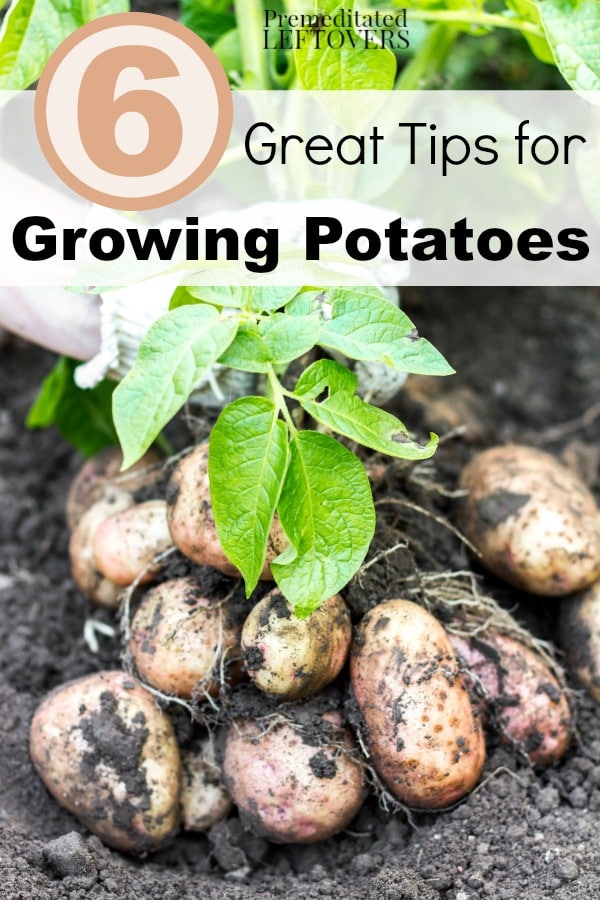 Potatoes come in so many different varieties! Some are small, some are large. Some potatoes are brown, and some are purple! All are delicious and can be used in tons of different recipes! If you’d like to add homegrown potatoes to your garden, you should read these 6 Great Tips for Growing Potatoes!
6 Great Tips for Growing Potatoes
1. Avoid Scab– With most crops, adding manure is a good idea. Not so with potatoes. If you want to grow great potatoes, avoid adding animal manure to your crops. This includes compost that uses animal manure. If you use animal manure, your potatoes will be at risk of scab. This is a disease that causes lesions to grow on the outside of your potatoes. While the infected potatoes are still completely edible, they look pretty unappetizing until you cut all the scabs away. It’s best to avoid it as much as possible.
2. Hill the Soil– Potato tubers grow in the dark. An easy way to keep them in the dark is to simply build a hill of soil on top of them. You should start hilling when your potato plants are 8-10 inches high. Cover the potato vines up so that just the top layer of leaves is exposed. Hill your potatoes again in about 2-3 weeks. In the second hilling you can use straw, leaves, or mulch instead of dirt. The second hilling doesn’t have to go up as high. Instead, just add another 2-4 inches of soil or mulch around the potato plants’ vines.
3. Water Consistently– Potatoes need consistent watering in order to flourish. This is especially true when they’re growing flowers. To keep your potatoes well-watered, ensure that they’re getting between 1-2 inches of water each week. If you’re not getting enough rain, remember to water them yourself or use a drip irrigation system. Once the potato leaves start to turn yellow and die, you can stop watering and start planning for your harvest!
4. Plant Deep– It’s best to plant potatoes deep in trenches. Try to plant yours 4 inches down and 8-12 inches apart. Each trench should be about 2-3 feet from the others. If you’re planting cut seed potato pieces, plant them so the cut sides are pointing down and the eyes are pointing up.
5. Watch Out for Beetles– If you hope to grow great potatoes, you’ll need to keep an eye out for pests. In particular, watch out for beetles that are yellow-orange with black stripes. Those are Colorado potato beetles and they can severely hurt your potato crops. They can even do so much damage that they completely kill potato plants. They can be hard to kill with insecticides, so prevention is a better route to take. Try to keep your garden free of weeds as the beetles may feed on them. Also consider planting some buckwheat plants. Their blooms will attract other insects that prey on the beetles. If you ever do see the beetles, don’t wait to get an insecticide. Pick and kill the bugs by hand immediately.
6. Rotate– If you’ve planted potatoes before and are hoping to grow great potatoes this year, then you’ll need to avoid planting in the same place as last year. In fact, you should rotate your potato patch so that where they’re planted hasn’t grown potatoes for 3-4 years. Doing this will help your potato plants be free of disease and grow bigger, better potatoes!
What type of potatoes would you like to grow?
More Gardening Tips:
10 Tips for Growing Vegetables
How to Use Succession Planting to Grow More Food
7 Gardening Tips to Produce Larger Harvests
7 Common Gardening Mistakes You Might Be Making
Thanks Savanna for sharing your gardening tips!

Susan says
Hi, what causes the brown spots in side the potatoes? Happened the last couple years. Not sure what causes it
Thanks
Roxan says
If I’m going to plant gain potatoes next year should I need to feed the soil/land? Can I plant tomatoes or onion on the same soil where i planted potatoes?
Ella Wilson says
Hello, Ann! I had fun reading your post – it’s worth my time. Thanks, fo sharing this and I look forward to more post from you!