The following article was written by Andrew of Appliance Helps Appliance Parts:
Let’s imagine your fridge. If it’s anything like mine, it’s pristine on the outside and horribly confused on the inside. It’s probably full of things that shouldn’t be there (old tofu? Gross!), and that are so well-hidden that they won’t be found until they start smelling. I’m here to tell you that there is a better way! I have three ways to make your fridge (and freezer) more full of fresh food, cheaper to run, and easier to navigate.
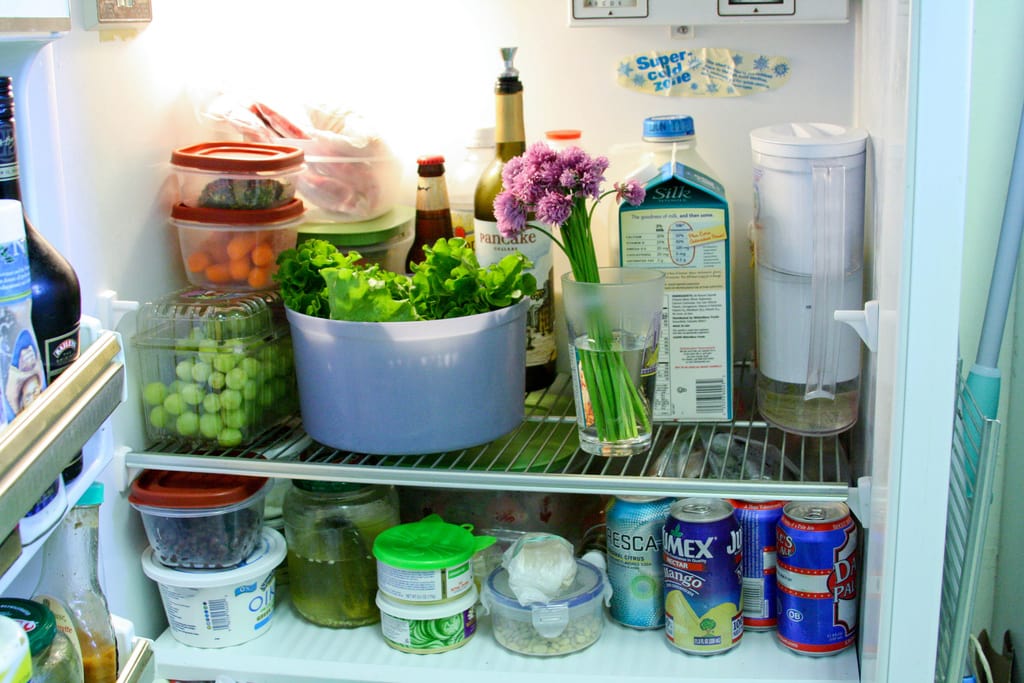
Longer lasting food:
- For your veggie crisper: to avoid rot, mold, and other annoyances, line the bottom of the drawers with paper towels or pack in an ethylene absorber. Why the worries about ethylene? It’s a chemical that’s naturally emitted by some fruit, and which has the potential to cause rot or over-ripening in other kinds of fruit. Another option is to store fruits that produce ethylene (apples) apart from fruit that absorbs it (bananas). Use this chart to see what fruit need to be separated, and use this site to see which of those fruit don’t need to be refrigerated. It’s worth doing some research, because some fruit and veggies should not be kept in the fridge at all, like tomatoes, squash, and oranges.
- Freezers are your best friend: a surprising amount of things will last much, much longer in the freezer. Just make sure that you enclose the food in an air-tight, resealable container.
- Bonus tip: don’t put bread in the fridge at all. Though it might take longer to “go bad,” it will definitely dry out much quicker.
Make the most of the storage space:
Since your fridge isn’t uniformly cold, and some shelves won’t fit items of all sizes, one big challenge is to figure out where to put everything. Here are some basic steps to follow:
Get rid of what you don’t need to store, but don’t get rid of too much. If your fridge is too full, you risk letting the things that need to be used go bad; if it’s too empty, you’ll lose more cold air every time you open the door than if you’d had a full fridge. The balance can be found in dollars: if you’re throwing out more than you’re saving in power bills (and it won’t be too much), then you should pack that fridge more fully. Use the freezer if it gets too full, too.
Store the least perishable items in the hottest parts of the fridge. The top shelf and the door are usually the warmest places, and as a result, you should put resilient items there: large drink containers, condiments, salt-brined or preserved foods, and other things that only need a slightly cooler atmosphere to stay edible.
The longer you have to cook it, the lower it should go. Don’t put meat above your veggies, or you risk cross-contaminating your salad greens with seriously dangerous bacteria. Once I found out about this tip, I ran to my fridge to move the package of bacon that had been sitting over the veggie drawer.
Bonus tip: use a binder clip to stack beverages!
Lower your power bill:
Turn up the the temperature. For your food to be stored safely below the range that bacteria can grow in, you should have the temperature set between 35°F and 38°F. Much colder than that and you’ll have another freezer, which isn’t a good thing for most produce.
Stock it up. The fuller your fridge is, the more the temperature will be regulated each time you open and close the door. Items in your fridge will act like pizza stones in ovens, but instead of emitting heat, already-refrigerated objects will radiate cold, which helps bring the temperature of the fridge back down quickly after you’ve closed the door again.
Check the condenser coils, seals, and door alignment. The condenser coils (located either on the back or on the bottom of your fridge) should be dust-free; seals should be uniform in shape and free of tears, cracks, or other disfigurations; and the only resistance that a door should have is when you first open it and break the seal that keeps your food cold.
Bonus tip: get an Energy Star appliance. Depending on how old your fridge is, you might get paid to it removed, as utility companies are not too fond of the incredibly electricity demands associated with these old appliances.
By day, Andrew works at Appliance Help Appliance Parts as a Community Coordinator. By night, he’s a dedicated cooking geek and blogger, trying to find new and exciting techniques that will make the tastiest food around.

Julia @ juliecache says
Thanks for sharing this very informative guest post with the Frugal Tuesday Tip. http://juliecache.com/2012/01/30/frugal-tuesday-tip-53/.html Will tweet this one for sure!
Barb @ A Life in Balance says
Good tips! I just read somewhere about keeping a thermometer inside the fridge to measure the temperature. Then, you adjust the gauge accordingly.
Alea says
That is a good idea!
April @ The 21st Century Housewife says
Excellent post with some wonderful tips. Thank you for sharing it!
Jenni says
These are great tips! We’ve been better about eating all our produce before it goes bad, but sometimes we still end up throwing a few things away. And I should probably check those coils! 🙂
Cheryl says
Helpful hints, thanks for sharing! I love the name of your blog, it is similar to one of my recent posts
Planned Leftovers http://myfrugalfamily-cheryl.blogspot.com/2012/01/ham-post.html
I came to your site through Life as Mom
Maria @ The Hypothyroid Athlete's Kitchen says
great tips especially about produce. i waste so much because it goes bad.