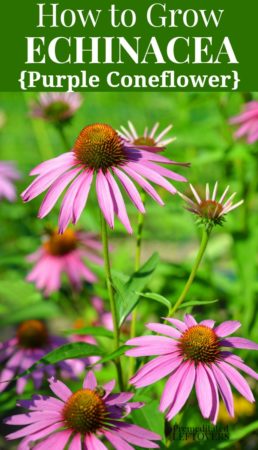
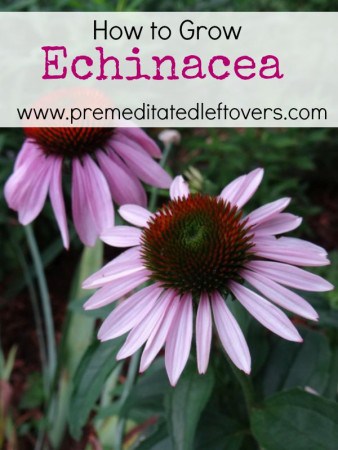
Use these tips on how to grow echinacea to add these lovely purple coneflowers to your herb garden or flower bed.
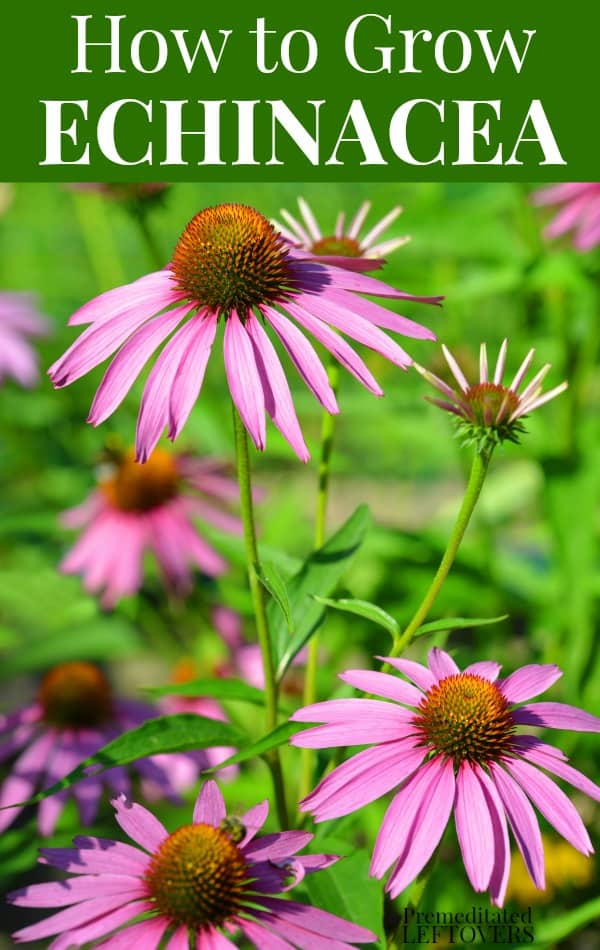
While you might not think you are familiar with echinacea, chances are you have seen these cone like flowers before. They look very much like daisies and are often called coneflowers.
Echinacea is a wonderful perennial for flower beds or can be grown in your herb garden to harvest for their healing properties. Here is How to Grow Echinacea in your own garden with fantastic results.
How to Grow Echinacea
Echinacea is the perfect flowering herb for the not so green-thumbed gardener since it is so hardy.
How to plant echinacea:
You can typically find this plant in the quart-sized containers at your local home and garden store. It is a perennial, so as long as you choose a few hardy plants you can enjoy them for years to come. Growing echinacea from plantings is easier and faster than trying from seed, and you can enjoy more immediate results.
Choose a plant that has been started in nutrient-rich soil, has bright foliage, and unopened blooms. Loosen it gently from the pot and prepare a hole that is the depth of the roots plus an additional 4-5 inches. Each plant should be 3-4 feet apart as they will grow in size and spread out. A spot with full sun or partial shade is important, as is nutrient-rich soil.
How to care for echinacea:
The wonderful thing about these flowers is they are so easy to care for. They are capable of retaining water which helps them get through any dry spells. It is good to give them 1-2 inches of water per week, but they will be able to take care of themselves should you not give them as much. They do not care for most fertilizers, and you will find that they don’t do well when divided.
A layer of mulch around the base will help the roots stay cool and keep the roots moist, which is important to a healthy plant. Deadhead your blooms as the flowers die in order to save their energy and help the plant develop new blooms.
The enemies you may notice when growing echinacea are mites, slugs, and snails. An insecticide can help with any bugs that wish to devour your plants. You can also try placing slug and snail traps around the plants or shallow dishes with beer to entice and trap them. I will warn you that echinacea flowers also attract birds who love to eat the seeds they produce. This is not an issue for most growers but if birds become a problem then a shiny, moving object to help scare the birds away can help.
How to harvest echinacea:
This is a plant that has so many uses, and you may notice it as a key ingredient in many health and beauty products. When you grow echinacea, you will enjoy reaping the benefits of it too! People use both the roots and the flowering heads of the plant in teas and to produce tinctures. The roots can be harvested at any time, and the blooms are at their best when they have freshly opened. You can simply snip the heads off and dry them for teas and tinctures. Harvesting the root usually involves removing the roots of a mature plant, washing them, and allowing them to dry.
You can also harvest seeds from the cones of the blooms as you wish. These can be removed by hand and either planted for a new crop or fed to birds.
Echinacea is a powerful herb with many health benefits, so why not try growing a patch? Give these tips for growing echinacea a try and see how easy it is to grow this lovely perennial in your garden.
More Herb Gardening Tips
10 Tips for Growing Indoor Herbs
Tips for Growing an Indoor Herb Garden

Leave a Reply