Use this guide to wash and store your fruits and vegetables to make your produce last longer.
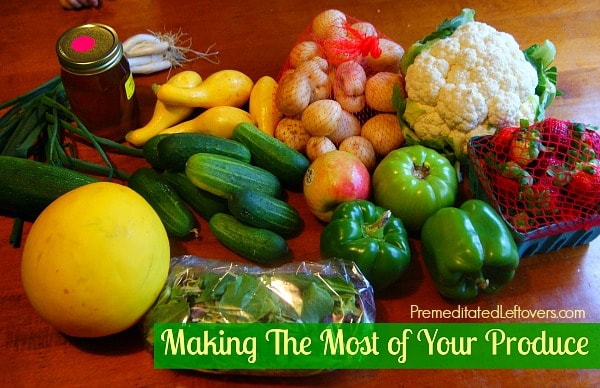
Whether you are buying from your local farmers market, CSA, Co-op, or even the grocery store there are things you can do to stretch your dollar and make your produce last longer. If you are like me when you walk into the bright, and colorful stalls of produce at the Farmer’s Market you are pulled in and probably overfill your basket. Then a week later you are tossing half of that beautiful produce out wilted and uneaten. I am hoping to bring you some useful ideas that will change that and help you to avoid that.
How to Make Your Produce Last Longer
Wash Produce
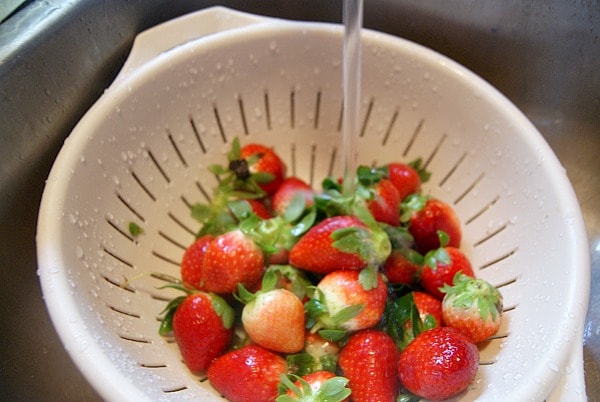
As soon as you bring your produce home you should wash it thoroughly to remove dirt and pesticide residue. The best way to do this is to first separate your fruit and vegetables. The method I prefer is to soak my produce in a sink or large bowl. Place your produce in sink or container and cover completely with water, stir in ¼ of white vinegar. Allow the produce to soak for 15-20 minutes, drain and rinse thoroughly.
- Vegetables like turnips, carrots, potatoes, and other root vegetables should be scrubbed with a clean vegetable brush under running water.
- Leafy vegetables can be washed in the vinegar soak and rinsed well. Pay extra attention to the inner layers where dirt can hide. Pull off a layer or two of the outside leaves off and compost.
- Pat all your produce dry with towels thoroughly and gently.
- Even melons should be washed well, even though it has a thick rind, when cutting into a melon you can introduce exterior contaminates to the fruit inside.
Make a Plan
Obviously this is the ideally done before you go shopping, go with an idea in mind of what you want to use your produce for throughout the week. However, this may not always be possible, sometimes you don’t know what’s coming in your CSA box, or there may have been a great price on your favorite vegetable, or you just went overboard and bought more than can be eaten within the window of time you have to eat your produce at its peak. A good combination of meal planning and freezer prepping will assure nothing goes to waste.
Sort and Store
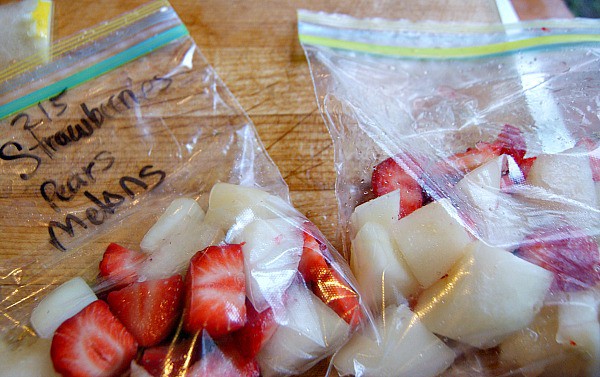
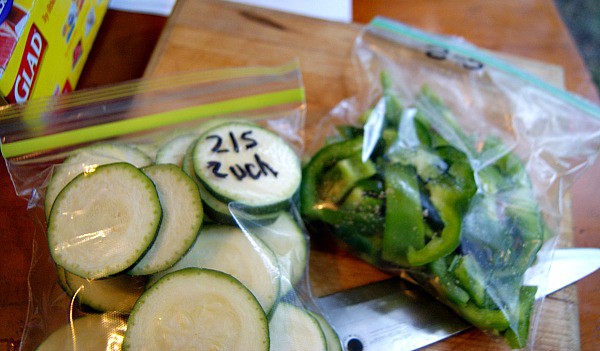
After you have decided what to do with your produce you can then sort accordingly- the acorn squash for tomorrow night’s dinner might sit on the counter, half of a full flat of strawberries can be hulled, sliced, and placed in a container in the fridge for quick snacks while the other half can be placed in containers or freezer bags for smoothies, or desserts. Chop squash, zucchini, onions, and peppers to store in the freezer, they all freeze beautifully for cooking later. I like to purchase a lot of pickling cucumbers and slice them, throw them right into a jar with vinegar and spices to make a delicious refrigerator pickle ( Recipe to come in my next post) To freeze make sure you have plenty of bags or freezer-safe containers on hand and a sharpie to mark the date and don’t forget to rotate them to the front when you add new produce.
Where to Store Produce
Here is a quick reference list of fruits and vegetables that should and should not be refrigerated.
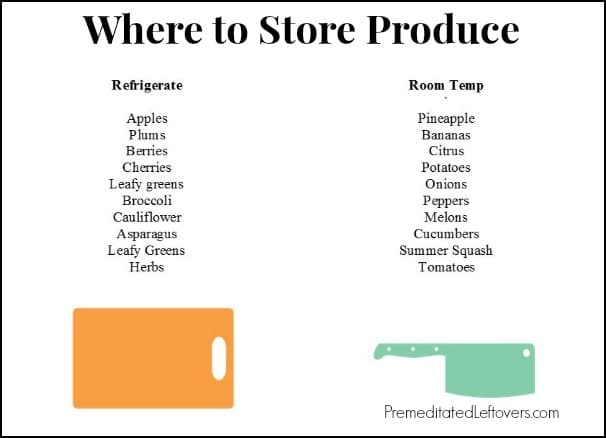
Some fruits continue to ripen after you have brought them home if you have some that are still a bit hard you can set them on the counter until they begin to soften and then transfer them to the refrigerator. These are things like; Peaches, Kiwis. Mangoes, Pears, Plums, Cantaloupes, Honeydew, and Avocados.
More Money-Saving Produce Tips
- How to Save Money on Produce
- 10 Ways to Save Money on Organic Food
- The Dirty Dozen and the Clean 15
- A Guide to What Produce is in Season When
- Tips for Getting the Best Deals at Farmers’ Markets
- 10 Ways to Save on Groceries without Using Coupons

KimH says
I have found that if you rinse off your lettuce.. let it dry most of the way, then place it into a ziplock baggie with a paper towel or two in it, and keep it in the warmest part of your frig, you can extend the life of your lettuce up to 6 weeks. My last CSA share lasted that long this past fall. I was amazed.
While rinsing strawberries usually causes them to start to mold, if you will rinse them with water & vinegar 2:1 ratio, and then let them air dry, it will inhibit the molding and they will last a few days longer than average.
You can leave peppers, squash & cucumbers out of the frig.. but they will go bad much faster and not be as fresh if you put them in the refrigerator. I leave mine out if I know Im going to use them in the next day or two, but if Im waiting for more from my garden before I do anything with them, they get refrigerated.