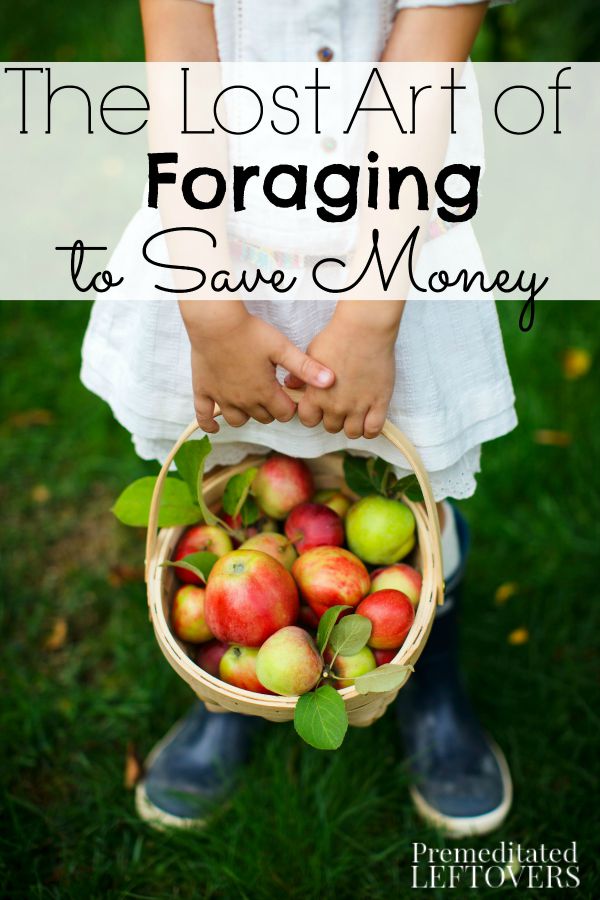
Back in the Great Depression and even before then, foraging for food was a necessary skill. Money was tight so being able to find food was a huge budget saver! You can still do this today you just need to know what to be on the lookout for!
The Lost Art of Foraging to Save Money
I have been out to some farms with wooded areas and found orange trees or apples trees hidden in the woods! Talk about a great score for produce!
A few things to remember:
Taking food from your property of course is okay, but if you are on someone else’s property you will need their permission. Some places of business have bushes that produce berries and they let the employees there gather berries when they ripen, others won’t let you touch them. So always know your limits. If in doubt, ask before you pick fruit! While it’s great to save money, it’s not worth the cost of fines or bail money for trespassing or stealing.
Do your research and learn what fruit and nuts look like. Some can be poisonous so know what those look like as well! Also try to find out if dangerous chemicals have been used on the plants. You should know if you have used chemicals on your property, but ask your neighbor if they have sprayed their tree, and if so with what, before you pick some apples.
Next, please only take what you need and try to leave some for someone else. If you get there and can tell someone else has been there and there is only a little left it’s ok to take what is left but if you are the first please don’t take it all. Be courteous and share!
Where can you find places to forage?
Of course your own back yard is a great place to start. Sometimes you can find bushes with berries, if you have violets you can use them for things like violet honey which can be used for Violet Honey Butter YUM!
Dandelions are abundant in spring and can be used for many things. In Ohio they have a Dandelion Festival with everything from wine to ice cream! They have dandelion pasta sauce, cookies, and they use it in the gravy for mash potatoes. It also makes a great spice in soup, baking fish, and more!
Here are more edible flowers.
More Recipes Using Flowers:
Use a site like Falling Fruit to find places where you can forage for free! They list everything from fruit, like cherries and peaches, to nuts and more!
What types of foods can you find foraging?
This depends on where you live. If you live up north you will most likely find blueberries and black berries. Places down south you are more likely to find citrus like oranges, grapefruit, and lemons. Mostly it’s easiest to find fruits and nuts. If you are an advanced forager and know what to look for, you can find some veggies too.
Have fun and make sure to do your research! What items have your been able to forage?
More Ways to Save Money on Produce
How to Save Money By Weighing Your Produce
How to Grow Produce in Containers
How to Save Money on Produce in the Winter
Danielle is a mom of 4, Former Navy Wife, Homeschooling mom, frugalista and blogger at The Frugal Navy Wife. She and her family of 6 are currently setting out on their lifelong dream to travel via RV around the United States. They are documenting their journey on Roadschooling with The Frugal Navy Wife.

Alicia Bayer says
We started learning about foraging as a homeschool project 3 or 4 summers ago and it has become a huge way of life and way that we feed our family of 7. We have foraged: morels, asparagus, apples, pears, raspberries, black raspberries, gooseberries, acorns (acorn flour is delicious and super nutritious), elderberries, walnuts, ramps, nettles (a wonderful source of iron and a natural way to cure seasonal allergies, taste like spinach once cooked but a little nicer actually), pheasant back mushrooms, violets, dandelions (dandelion syrup is delicious!), purslane, wild plums, crab apples (crab apple cider is easy and delicious to make on the stove) and more. 🙂
Parks are a great place to forage (state, county and city). Most allow foraging as long as you don’t dig anything up. Some welcome digging things up if they’re invasive, like garlic mustard, as long as you check first. We have some county parks nearby that are the sites of long-gone homesteads and there are lots of fruit trees there. We canned several dozen quarts of wonderful pears from there last fall. Also, many businesses are happy for you to pick their apples, cherries, crab apples, etc. on their property. It helps them keep the grounds clean and they generally don’t use the fruit or spray it. We always check first, of course.
Carol Kain says
I’m a forager from way back! I pick blackcaps (wild black raspberries), wineberries and even apples. We’ve trees near us that are in old hedgerows and hang out to the road side. The land on the other side is a no longer used railroad bed. If you live in a farm area, old farms used to have trees along the fields, sometimes. By picking from the roadside, I get them free. They are great for applesauce, applebutter, jelly or pies. Sometimes, too, people have fruit trees in their yards that they don’t pick. A knock on the door may give you a new place to pick. A bribe of a gift back to them, like jelly, may help!
Demetra says
I’ve never foraged for food but a friend told me about berries growing on a roadside not far from where I live. I never picked any but she said she saw people out there getting berries frequently. I think I’m going to give it a try.